
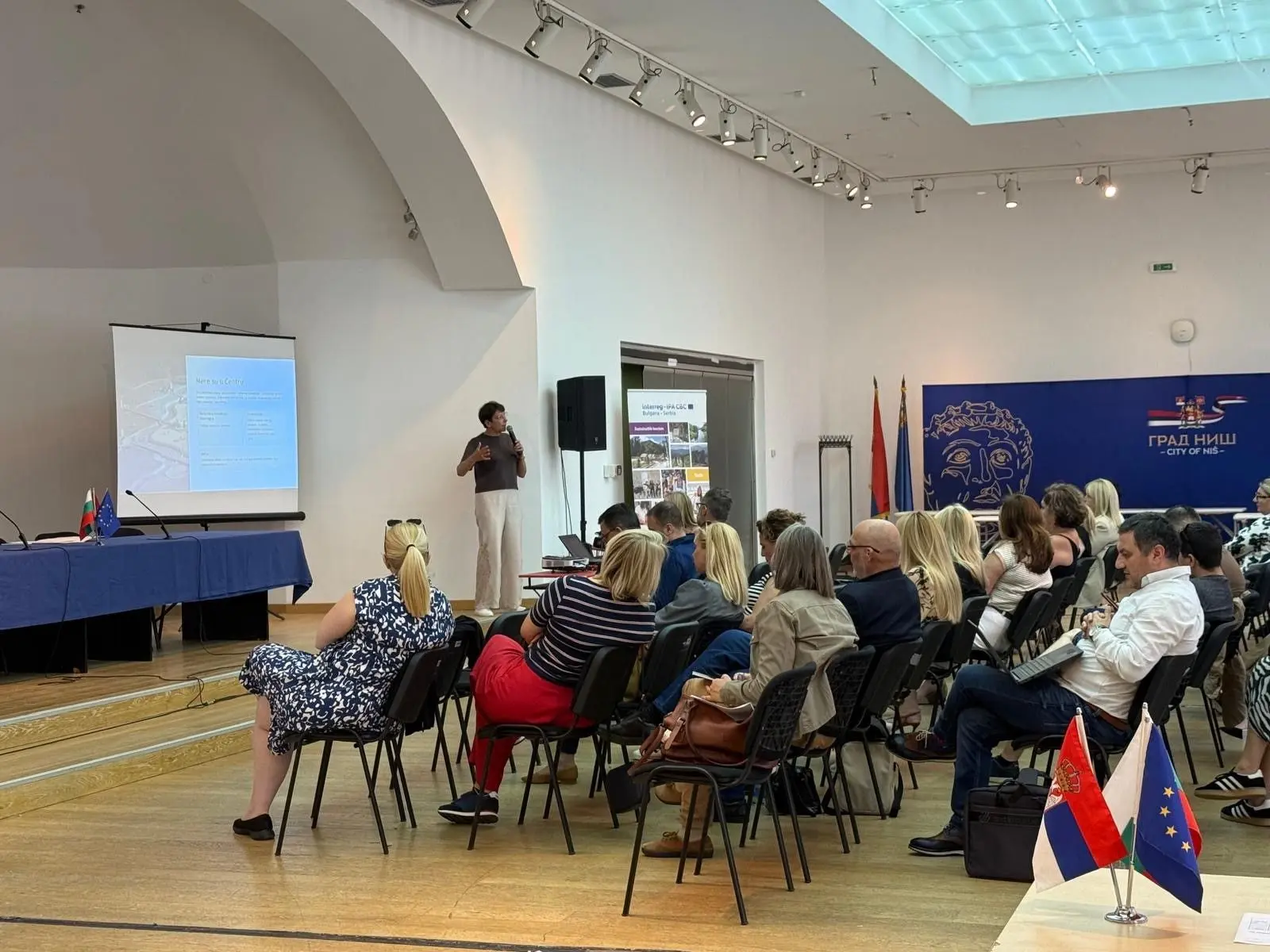
What are the actual needs of border regions and in which areas should support be focused in the coming period? These were the key questions of the discussion during the first regional consultations for the preparation of the new Interreg Bulgaria–Serbia Programme 2028–2034, held in Zaječar (on 28 May) and Niš (on 29 May).
The meetings brought together representatives of local and regional authorities, public institutions, Civil Society Organisations, the educational and scientific sectors, as well as the economy. The discussions were open and focused on specific challenges and possible solutions, with the aim of identifying the priorities of the future programme.
The participants agreed that, in order to achieve sustainable regional development, it is necessary to invest more in people through the improvement of social and healthcare services, as well as through measures that contribute to greater social inclusion and quality of life in local communities.
At the same time, a significant part of the discussions was dedicated to issues of the environment, security, and resilience of the region. The topics discussed concerned watercourse treatment, nature conservation, waste management, urban greening, dendrology, and the circular economy.
The need to strengthen the link between education, science and business was particularly stressed in order to encourage innovation, digital transformation, the development of new knowledge and skills, and the creation of conditions for retaining youth in the region.
In this context, the Interreg Programme was recognised as an important instrument for building partnerships and implementing ideas which would have been difficult to implement without cross-border cooperation.
There was also an open discussion about the practical challenges that potential beneficiaries face. The participants pointed out the administrative burdens, the complexity of procedures, and mandatory co-financing.
The consultations clearly showed that early involvement of local stakeholders and open dialogue contribute to the creation of more realistic and efficient development directions. The ideas and suggestions collected shall be used to shape the priorities of the future Programme, so that it can respond to the specific needs of border areas and produce concrete results for citizens, organisations and the economy on both sides of the border.


